
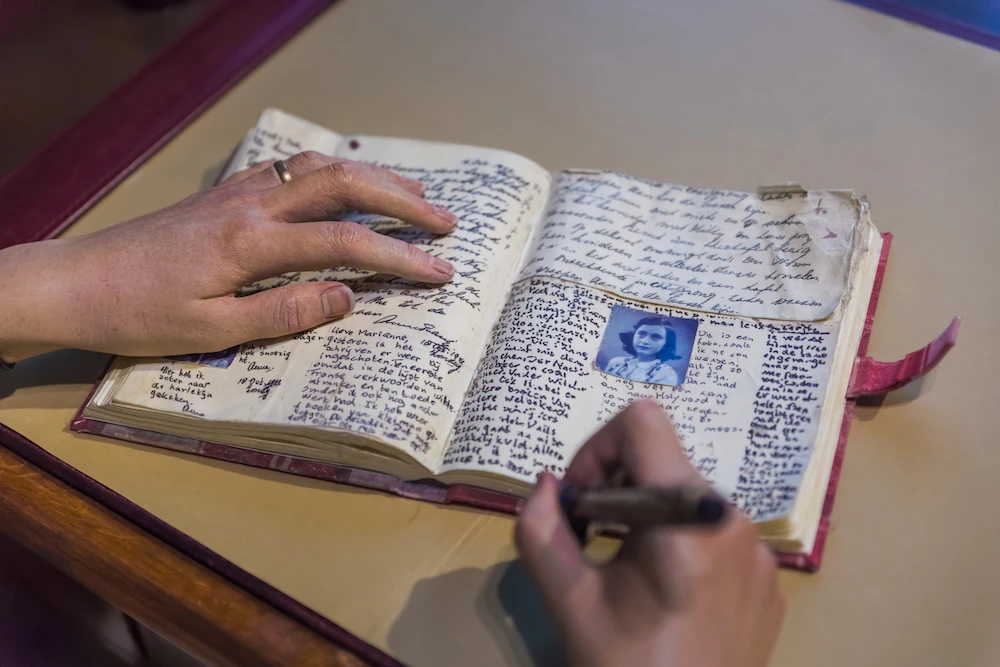
The personal writings of a young girl that became one of the most influential books in history
Anne Frank’s diary began as a simple gift for her thirteenth birthday in June 1942. What started as a private notebook soon evolved into a deeply personal record of life in hiding, written during the two years Anne spent in the Secret Annex. Through her words, Anne transformed everyday moments, fears, and reflections into a powerful narrative that continues to resonate across generations.
In her diary, Anne wrote with honesty and emotional depth about the challenges of confinement, her complicated relationships with her parents, and the tensions among those in hiding. She also explored her own identity, emotions, and aspirations, revealing a striking level of self-awareness. Far from being only a historical document, the diary reads as an intimate portrait of adolescence unfolding under extreme circumstances.
As the war progressed, Anne became increasingly conscious of her role as a writer. Inspired by a radio broadcast encouraging people to preserve wartime documents, she began revising her diary with the intention of publishing it after the war. This decision transformed her private thoughts into a carefully crafted testimony, blending personal experience with a broader reflection on humanity and injustice.
After the arrest of the residents of the Secret Annex in August 1944, Anne’s diary was recovered and preserved by Miep Gies, one of the helpers who had supported the family in hiding. Otto Frank later decided to fulfill his daughter’s wish by publishing her writings. First released in 1947, the diary quickly gained international recognition.
Today, The Diary of Anne Frank is one of the most widely read books in the world. Translated into dozens of languages, it remains a cornerstone of Holocaust education and a timeless reminder of the human cost of hatred, war, and discrimination.