
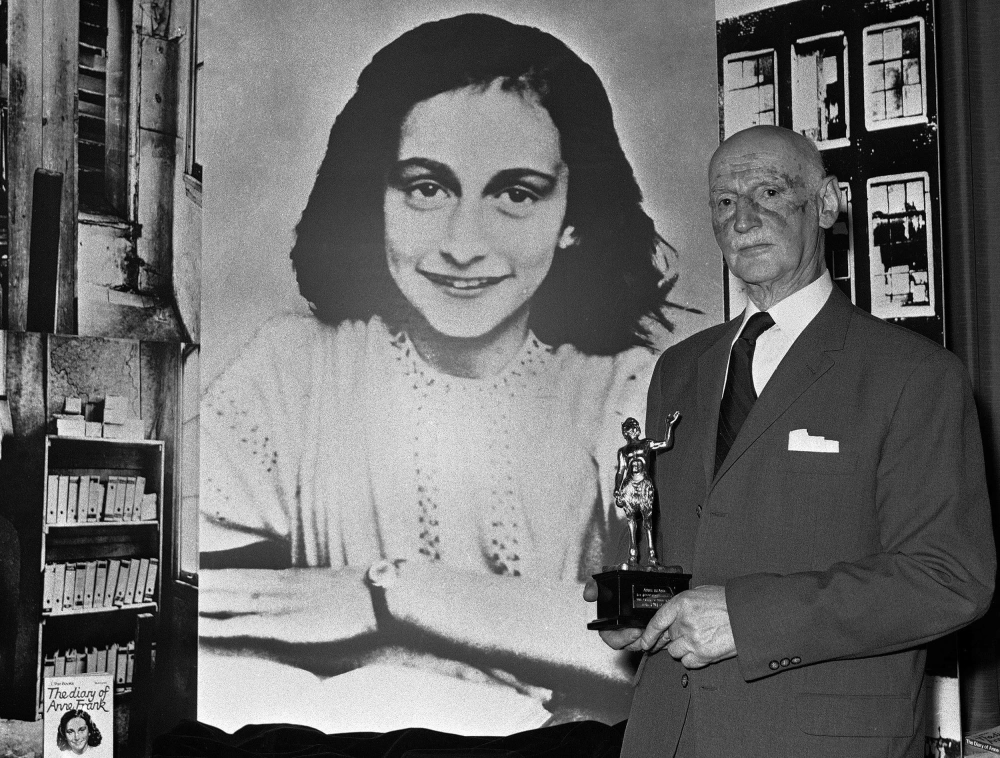
The journey of a father who survived the camps and gave the world his daughter’s voice
Otto Frank was the only member of the Frank family to survive the Second World War. After being liberated from Auschwitz in January 1945, he slowly made his way back to Amsterdam, unaware of the fate of his wife Edith and his daughters, Margot and Anne. Upon his return, he learned that all three had died in concentration camps, a devastating revelation that marked the beginning of a long period of mourning.
In the months following the war, Otto was given Anne’s diary by Miep Gies, one of the helpers who had protected the family during their time in hiding. She had kept the notebooks and loose pages safe, hoping to return them to Anne after the war. Reading his daughter’s words for the first time, Otto discovered not only her inner world but also her ambition to become a writer and to share her experiences with others.
Despite his grief, Otto recognized the historical and human value of Anne’s writing. He made the difficult decision to have the diary published, carefully editing the text while remaining faithful to Anne’s voice. The first edition was released in the Netherlands in 1947, marking the beginning of a journey that would bring Anne Frank’s story to an international audience.
As the diary gained worldwide recognition, Otto Frank dedicated the rest of his life to protecting his daughter’s legacy. He worked closely with educators, publishers, and institutions to promote tolerance, human rights, and historical awareness. His efforts helped transform a personal diary into a universal symbol of remembrance and resistance against hatred.
Otto Frank died in 1980, but his role in preserving Anne’s story remains essential. Through his courage and commitment, Anne Frank’s voice continues to speak to the world, reminding future generations of the importance of memory, empathy, and responsibility.