
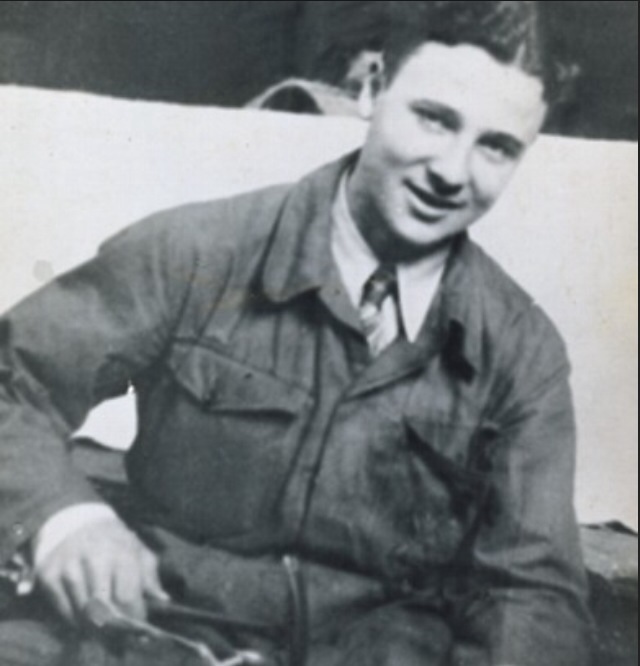
The story of Anne Frank’s closest companion during their time in hiding
Peter van Pels was born on November 8, 1926, in Osnabrück, Germany, into a Jewish family that later fled to the Netherlands to escape Nazi persecution. In Amsterdam, his parents worked closely with Otto Frank, a professional connection that would eventually bind their families together in the most dramatic circumstances. When deportations of Jews intensified in 1942, the Van Pels family went into hiding alongside the Franks.
From July 1942, Peter lived in the Secret Annex with seven other people, including Anne Frank. At sixteen years old, he was the only teenage boy in the hiding place, a quiet and reserved presence in a tense and confined environment. Anne initially described him as shy and awkward, but over time, their relationship evolved into a close friendship that offered both of them comfort and emotional escape from daily fear.
Anne wrote extensively about Peter in her diary, portraying him as sensitive, gentle, and often misunderstood. Their conversations in the attic of the Annex became moments of intimacy and reflection, where they discussed their fears, hopes, and dreams for life after the war. For Anne, Peter represented both companionship and the first experience of young affection under extraordinary conditions.
Life in hiding was particularly difficult for Peter. Struggling with isolation and the pressure of constant silence, he often withdrew from others. Yet the diary reveals his inner kindness and vulnerability, qualities that Anne came to admire deeply. Their bond illustrates how human connection persisted even in the most oppressive circumstances.
After the arrest in August 1944, Peter was deported to Auschwitz and later transferred to the Mauthausen concentration camp in Austria. He died in early May 1945, just days before the camp was liberated, at the age of 18. Today, Peter van Pels is remembered not only as a historical figure but as a young life interrupted, whose presence in Anne Frank’s diary adds depth, humanity, and emotional resonance to one of the most important testimonies of the Second World War.