
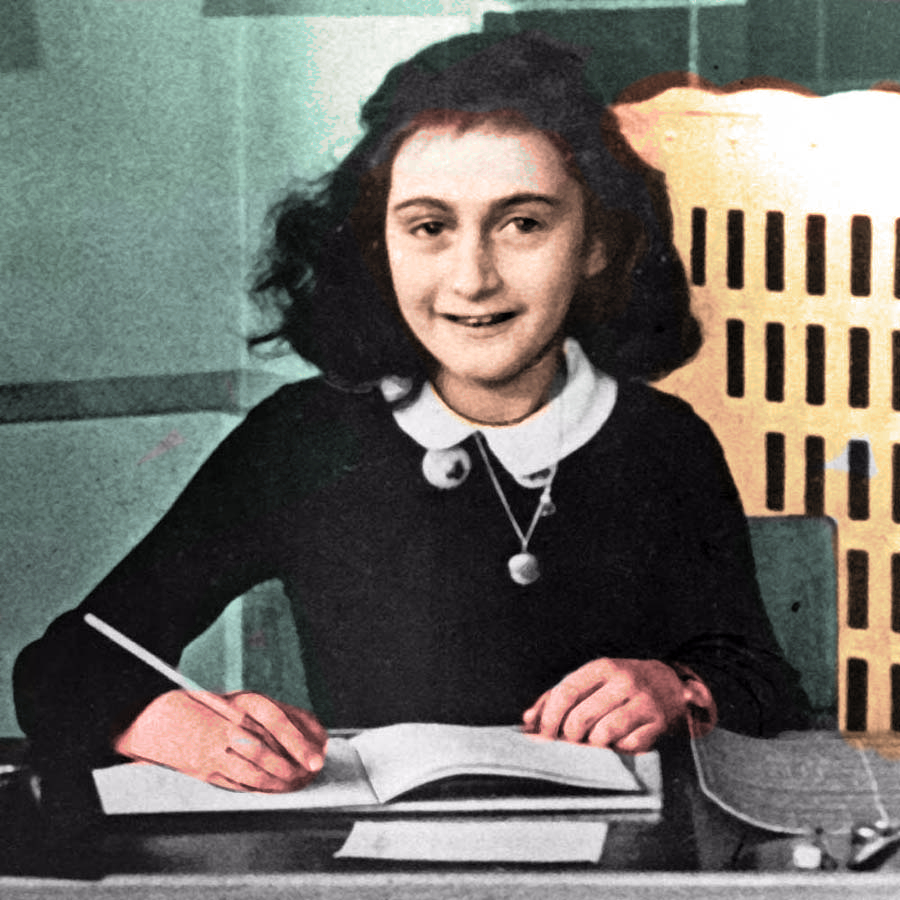
The story of a teenage girl whose words became one of the most powerful testimonies of the Holocaust
Anne Frank was a Jewish girl born on June 12, 1929, in Frankfurt am Main, Germany. In 1934, as the Nazi regime rose to power, her family fled Germany and settled in Amsterdam, hoping to find safety and a peaceful life. This sense of security ended in 1940 when Nazi Germany occupied the Netherlands and anti-Jewish laws gradually stripped Jewish families of their rights and freedoms.
In July 1942, when Anne was just 13 years old, the Frank family went into hiding to avoid deportation. For more than two years, they lived in a concealed space behind Otto Frank’s business premises. This hidden apartment, now known as the Secret Annex, became a confined and silent world where daily life was shaped by fear, tension, and the constant hope of survival.
During this time, Anne kept a diary in which she wrote about her daily experiences, her thoughts and emotions, and her reflections on war, humanity, and her own personal growth. Her writing shows remarkable maturity, intelligence, and sensitivity for someone so young. Between 1942 and 1944, Anne’s diary evolved into a deeply human account of life in hiding and has since become one of the most widely read personal documents of the Second World War.
In August 1944, the hiding place was discovered, and Anne, her family, and the others in hiding were arrested by the Gestapo. They were deported to concentration camps, where Anne and her sister Margot eventually died of typhus at Bergen-Belsen in early 1945, only weeks before the camp was liberated.
Otto Frank, Anne’s father, was the only member of the family to survive the war. After returning to Amsterdam, he found Anne’s diary, which had been preserved by those who helped them hide. First published in 1947, The Diary of Anne Frank has since been translated into dozens of languages and read by millions around the world, ensuring that Anne Frank’s voice continues to speak for remembrance, tolerance, and humanity.